
Trust is one of the main commercial problems in recommerce. A customer entering a store that sells only used products cannot assume that two units of the same model have the same condition, history, or remaining lifespan. Unlike new retail, where the buyer expects standard quality from every item, recommerce begins with uncertainty. The store must therefore replace that uncertainty with information, procedures, and accountability.
The same principle can be seen across digital services, where users assess whether a platform is worth using by looking at access, rules, interface, and reliability, whether they are buying products or using entertainment services such as jetx online. In recommerce, however, trust must extend beyond the website. The customer needs evidence that the physical item has been checked, described correctly, priced logically, and backed by a seller that will remain responsible after payment.
Start With a Condition System Customers Can Understand
A recommerce store cannot build trust if product condition is described with vague labels such as “good” or “very good” without explaining what those terms mean.
A grading system should connect each grade to observable criteria. For electronics, this may include screen scratches, frame damage, battery performance, ports, buttons, cameras, and previous repairs. For furniture, the criteria may cover structural stability, stains, surface wear, and missing parts. For clothing, they may include fabric wear, marks, repairs, and alterations.
The customer should be able to compare grades before viewing an individual product. If Grade B allows several visible scratches but no functional defects, that rule should apply across the inventory. Consistency matters more than using attractive language.
Show the Actual Product, Not an Ideal Version
Trust decreases when a product page shows a generic image while the buyer receives a unit with different marks or signs of use.
Whenever possible, recommerce stores should photograph the actual item being sold. Images should show the front, back, sides, corners, labels, and any visible defects. Damage should not be hidden through lighting, cropping, or editing.
This approach changes the role of photography. In conventional retail, images often aim to make a product look desirable. In recommerce, images also serve as evidence. A customer who sees a scratch before ordering is less likely to interpret it as a surprise after delivery.
Explain What Has Been Tested
A statement such as “fully tested” sounds reassuring, but it provides little value unless the buyer knows what testing includes.
A stronger product page can specify the checks performed. A smartphone listing, for example, may state that charging, speakers, microphones, cameras, biometric functions, screen response, wireless connections, battery condition, and buttons were tested.
For appliances, the inspection may include power, heating, cooling, pressure, noise, leakage, or motor performance depending on the product type.
The goal is not to overwhelm the customer with technical data. It is to show that the store uses a repeatable inspection process rather than relying on a quick visual check.
Make Product History Visible Where Possible
Used goods often create questions that new products do not. Has the item been repaired? Was a component replaced? Is the battery original? Has the product been restored after damage?
A recommerce store should disclose relevant history when that information is available and verified. If a screen was replaced, the listing should say so. If a device was repaired before resale, the customer should understand what work was completed.
The store should also distinguish between known and unknown information. Claiming to know the full history of an item without evidence creates more risk than simply stating that previous ownership details are unavailable.
Transparency does not require perfect information. It requires honesty about the limits of the information available.
Use Warranties to Transfer Risk Away From the Buyer
A warranty is one of the strongest trust mechanisms in recommerce because it changes who carries the financial risk if the product fails.
Without protection, a customer may hesitate to spend several hundred dollars on a used device because a hidden fault could appear soon after purchase. A warranty reduces that concern by giving the buyer a defined remedy.
The terms need to be clear. Customers should know how long coverage lasts, what faults are included, what exclusions apply, and whether the remedy is repair, replacement, refund, or store credit.
Complicated warranty language weakens trust. A short policy with clear conditions is more useful than broad promises followed by many exceptions.
Make Returns Part of the Trust Model
Returns are particularly important when buyers cannot inspect the product in person.
A recommerce store should define how long customers have to evaluate a purchase, what condition the item must be in when returned, who pays shipping, and how refunds are processed.
A clear return policy also signals confidence in the store’s own grading and inspection procedures. If a seller describes products accurately, the business should be able to accept reasonable returns without making the process difficult.
Return data can then become operational feedback. If one product category generates repeated returns because customers misunderstand a condition grade, the description system needs improvement.
Explain Why the Price Makes Sense
Used-product pricing can appear inconsistent unless customers understand what influences it.
Two similar devices may have different prices because of condition, battery health, storage capacity, included accessories, repair history, warranty level, or market demand. Showing these variables makes pricing easier to accept.
The store does not need to reveal its full margin calculation. It should, however, make the relationship between condition and price visible. A customer should be able to understand why one unit costs more than another.
This reduces the suspicion that prices are arbitrary.
Build Trust After the Sale
Trust is not completed at checkout. Delivery, packaging, customer support, warranty handling, and refund speed determine whether the buyer sees the store as a retailer or simply as a reseller.
Post-sale service matters even more in recommerce because customers know that used products carry more uncertainty. Fast responses and consistent problem resolution therefore become part of the product itself.
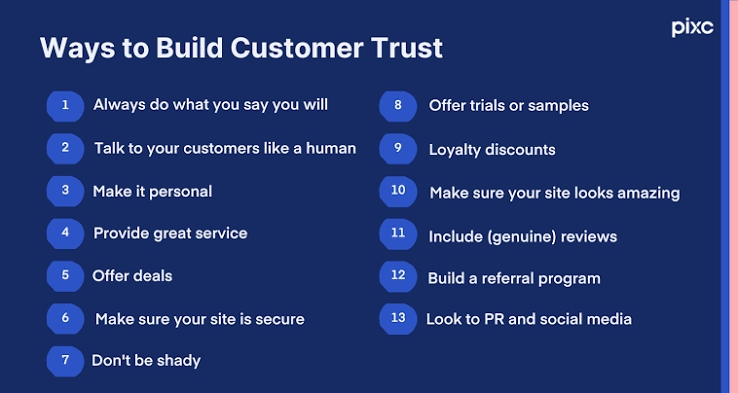
A recommerce store earns trust when it replaces uncertainty with systems. Clear grading, real photos, documented testing, transparent history, warranties, returns, understandable pricing, and post-sale responsibility all serve the same function: they reduce the amount of risk the customer must accept.
The fact that every product has been used before does not have to weaken the business. When condition and responsibility are managed well, prior use becomes a product attribute rather than a reason for distrust.
