
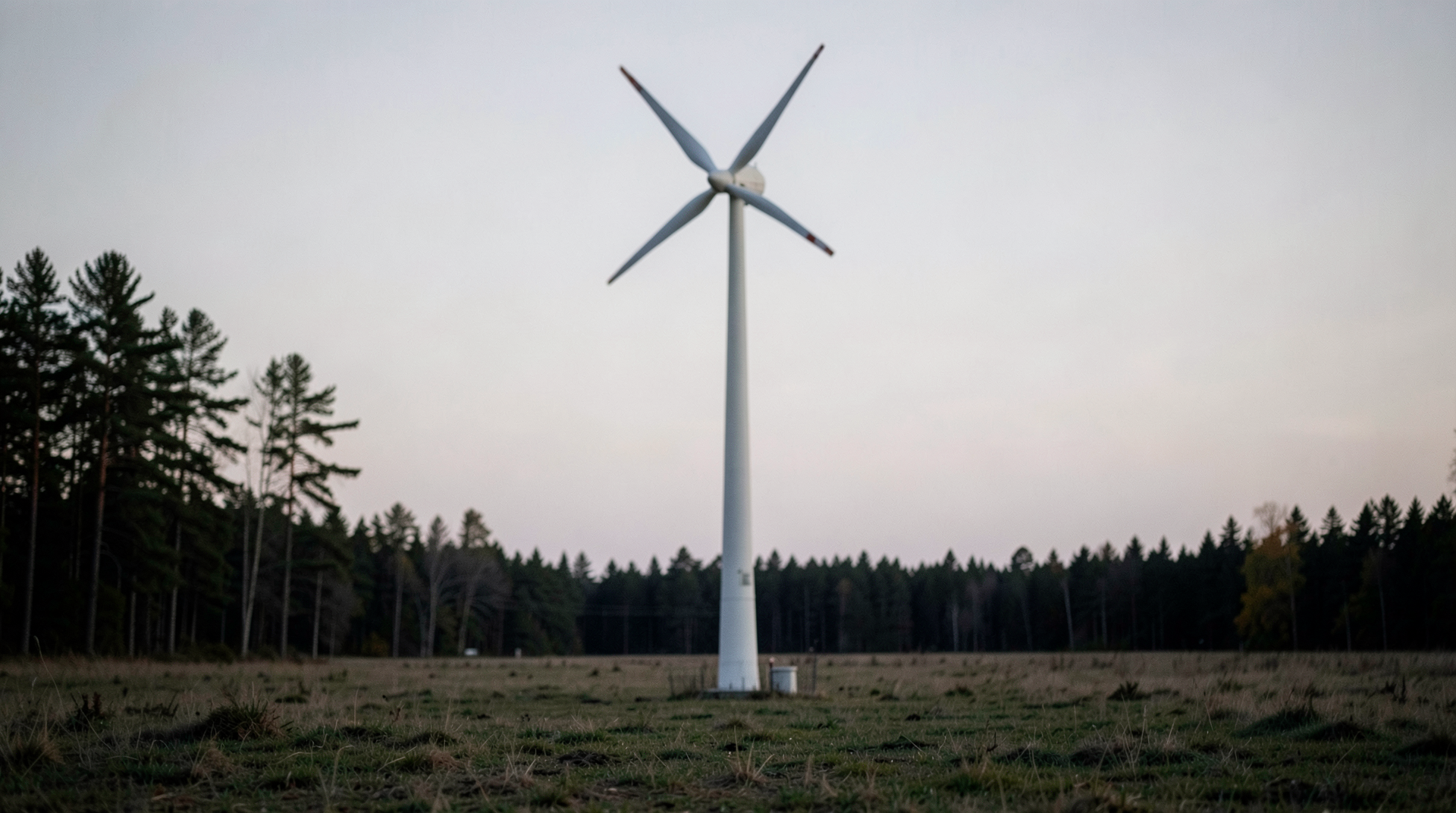
A small wind turbine can look like a straightforward property project, like an outbuilding or a service upgrade. It isn’t. Before anyone picks a tower location, a property may face provincial approval questions alongside municipal zoning, setbacks, and neighbour concerns.
Anyone looking into a wind turbine for home in Ontario runs into this two-layer system before reaching a turbine spec sheet. A sensible site review starts with the rules that shape whether the proposed location can work, rather than with the equipment catalogue.
Two Approval Layers
Ontario’s provincial framework deals with renewable energy projects, while municipal zoning affects where a tower or turbine may sit on a property. One layer doesn’t replace the other, and a site with decent wind can still raise planning questions that have nothing to do with energy output.
That catches people out on rural and off-grid properties. Open ground can make a turbine seem easy to place, but a site plan still needs to account for nearby homes, lot boundaries, access routes, existing structures, and the zoning rules that apply to the parcel.
Provincial Approval Basics
Ontario requires a Renewable Energy Approval, usually called an REA, from the Ministry of the Environment, Conservation and Parks for most wind, solar, and bio-energy projects. Some classes of small-scale wind projects are exempt, so a homeowner shouldn’t assume that provincial approval always applies, or that it never does.
The province’s renewable energy approval rules set out which wind facilities need an REA and how the province groups them. The word “most” matters because exemption depends on the proposed system’s class, not on whether the owner plans to use the electricity only on site.
An REA is a provincial environmental approval, not a building permit or zoning clearance. It sits alongside local review, which is why a call with the municipal planning office can save wasted work on a tower layout that won’t fit local rules.
Wind Project Classes
Ontario’s REA system sorts wind facilities by nameplate capacity and, for larger projects, sound power level. Nameplate capacity is the electrical output rating assigned to the turbine by its manufacturer, usually shown in kilowatts.
Sound power level refers to the sound energy produced by the equipment. Ontario expresses that rating in dBA for classification purposes, but it isn’t the same as the sound someone hears at a house, a property line, or a neighbouring yard.
The approval classes separate smaller facilities from larger ones, and sound power level helps distinguish the higher-capacity categories. A higher sound-power rating can place a larger project in a different approval class, so an assessor needs the turbine’s stated rating rather than a guess based on rotor size or tower height.
Rulebook Structure
The detailed REA rules sit in Ontario Regulation 359/09. Its structure includes parts dealing with wind facilities, public consultation, natural heritage assessment, and prohibitions that may affect whether a project can proceed at a proposed location.
That structure is why a site assessment can’t stop at wind speed or an annual energy estimate. The property may need review for environmental features and local land-use constraints, while the project description needs to match the approval class under consideration.
Public consultation also appears in the regulation’s structure. A turbine may be capable of producing electricity and still create concern if neighbours don’t have clear information about where it will sit or how its sound will be considered.
Noise and Neighbours
Noise discussions often go wrong when someone asks for one Ontario-wide number and expects it to settle the matter. Ontario’s earlier approach to wind sound considered ambient sound, meaning the background noise already present from wind, trees, roads, and ordinary activity around the property.
A 2005-era paper on Ontario’s wind turbine sound guidelines describes how the province assessed turbine sound against background sound levels and considered distance from dwellings under an earlier environmental approval framework. It is useful historical context, not a current rulebook with a figure to copy into a site plan.
When reviewing a location, sound must be assessed in the conditions around the property. Ask how the proposed turbine’s sound information will be assessed for that property, including nearby homes and the conditions around the site.
Setback Checks
Setbacks are distance rules that separate a turbine or tower from property lines, homes, roads, or other features identified in local rules. The material reviewed here doesn’t establish a single current province-wide setback figure that homeowners can apply everywhere, so the municipal bylaw needs checking before the design is settled.
Setback and zoning review have long been part of small-wind planning in Canada. Research on residential and small-business wind in Ontario has also identified sound, appearance, health and safety concerns, and fairness in the planning process as points of friction.
Bring these questions to a planning office or site visit:
- Which zoning rules apply to a wind turbine and tower on this lot?
- What setbacks apply to property lines, roads, and nearby dwellings?
- Does the proposed turbine fall into a class that needs provincial review?
- What current sound information does the municipality or ministry expect before a decision?
Written answers carry more weight than an informal estimate over the phone. They give the property owner and the people reviewing the site the same starting point when they discuss turbine placement.
Where to Start
Start with the site, not the equipment catalogue. Mark the proposed turbine area, nearby homes, lot lines, roads, and natural features, then ask the municipality which zoning and setback rules apply to that property.
After that, confirm whether the proposed system needs provincial approval and which project class may apply. Keep the turbine’s nameplate capacity and sound power information with the site sketch, then confirm current setback and sound requirements with the municipality and the provincial ministry before fixing the tower location.
