
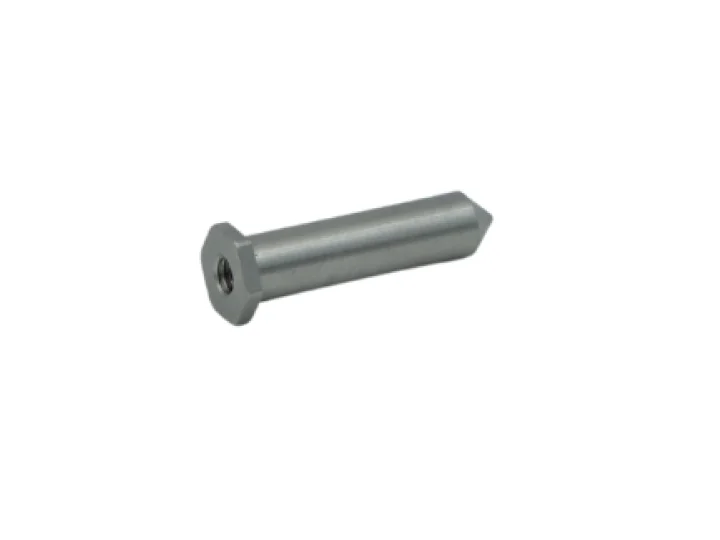
A press tool can close thousands of times a shift, and every stroke depends on the upper and lower halves meeting in the same place. Small shifts in that alignment show up later as uneven parts and faster tool wear. Well-specified guide pins keep each stroke on the same path, which protects both part quality and tool life.
Consistent alignment usually starts with a pin specified for more than size alone, with close attention to material, hardness and finish. When those details match the application, the tool runs true for longer and needs fewer adjustments.
Precision-made guide pins built to your drawing give tooling, die and fixture teams consistent positioning from the first run. Here is what to look for when specifying them.
Where Accurate Pins Hold Tooling and Fixtures in Line
Alignment in Die Sets and Press Tools: In a die set, guide pins locate the upper and lower die shoes so the punch enters the die opening in exactly the same position on every stroke. The pins slide through matching bushes with a controlled running clearance. That clearance keeps punch and die edges evenly spaced, which gives clean cuts, consistent burr height and longer intervals between regrinds.
Repeatable Location in Fixtures and Assemblies: Fixtures for machining, welding and inspection rely on pins to place each workpiece in the same spot every cycle. Moulds, jigs and assembly stations use them in the same way. When the pin fits its bore correctly, operators load parts faster and inspection results stay consistent from the first piece of a batch to the last.
What Tool Rooms See When Replacement Waits: In everyday tool room practice, maintenance teams often see worn pins left in service for weeks because a replacement was never specified in advance. As clearance grows, the die halves shift slightly with each stroke and cutting edges wear unevenly. A planned replacement keeps the repair small, while a late one can turn into a full die rework.
Specification Choices That Shape Pin Performance
Material and Hardness for the Duty Cycle: Precision locating pins are usually made from hardened bearing steel, case-hardening alloy steel or stainless steel, chosen by load, speed and working environment. Case hardening produces a hard outer layer over a tougher core, so the surface handles sliding contact while the core absorbs shock loads. Stainless grades suit washdown areas and humid workshops.
Dimensional Accuracy and Surface Finish: Diameter, roundness and straightness decide how evenly a pin shares load along its length. A ground and polished surface gives the bush a smooth running track, which helps lubricant hold its film and keeps friction low. Pins finished to a fine diameter tolerance also make replacement simpler, because new parts fit existing bushes without extra hand fitting.
Compatibility with Bushes and Mating Parts: A guide pin performs best when its fit, hardness and finish are matched to the bush or bore it runs in. Plain bronze bushes, ball cages and hardened steel bushes each need a different clearance and surface condition. Shoulder form, head design and retention method should also match the die shoe so the pin seats square every time.
Custom Pins Made to Your Drawing
Catalogue Pins or Drawing-Specific Parts: Catalogue pins suit standard die sets and short lead times, since common diameters and lengths are often available from stock. Custom parts suit tools with non-standard heights, special head forms or particular hardness targets. The trade-off is a slightly longer lead time on custom work, balanced by a pin which fits the tool without modification.
Diameter, Length and Hardness Set to Specification: Custom manufacturing allows guide pins to be produced to a defined diameter, overall length and hardness range taken directly from the engineering drawing. Material grade, heat treatment and surface finish are agreed before production begins. In-house checks on hardness and dimensions confirm that each batch matches the drawing before despatch.
Requesting a Quotation with the Right Information
Details That Speed Up Pricing: A clear request for quotation includes the engineering drawing, material specification, hardness range, surface finish and any coating or plating needs. Order quantities and expected delivery dates help the manufacturer plan production slots. When these details arrive together, the quotation usually comes back faster and needs fewer rounds of clarification.
Planning Quantities and Delivery Schedules: Procurement teams can order guide pins as a single batch or as scheduled call-offs linked to tool maintenance plans. Batch orders often lower unit cost, while call-offs keep spares on hand without tying up stock. Sharing annual usage estimates helps the supplier reserve material and keep delivery dates steady across the year.
Points to Include in Your Pin Enquiry
A complete enquiry shortens the path from drawing to delivery and reduces back-and-forth between engineering, quality and purchasing teams on both sides. The points below cover what a manufacturer needs to quote guide pins accurately, whether the order is a one-off replacement set or a repeat supply for a full tooling programme.
- Engineering drawing showing diameter, length, tolerances and head form.
- Material grade and target hardness range for the application.
- Surface finish and any coating or plating requirement.
- Order quantity, with any expected repeat or call-off volumes.
- Required delivery date and preferred despatch arrangement.
Keeping Every Stroke on the Same Path
Pins made to the right material, hardness and finish keep your tools aligned, your parts consistent and your maintenance planned rather than rushed. Each week a worn set stays in service, the repair grows larger and more costly. Send your drawings, quantities and delivery schedule today to request a quotation for your next batch.
